
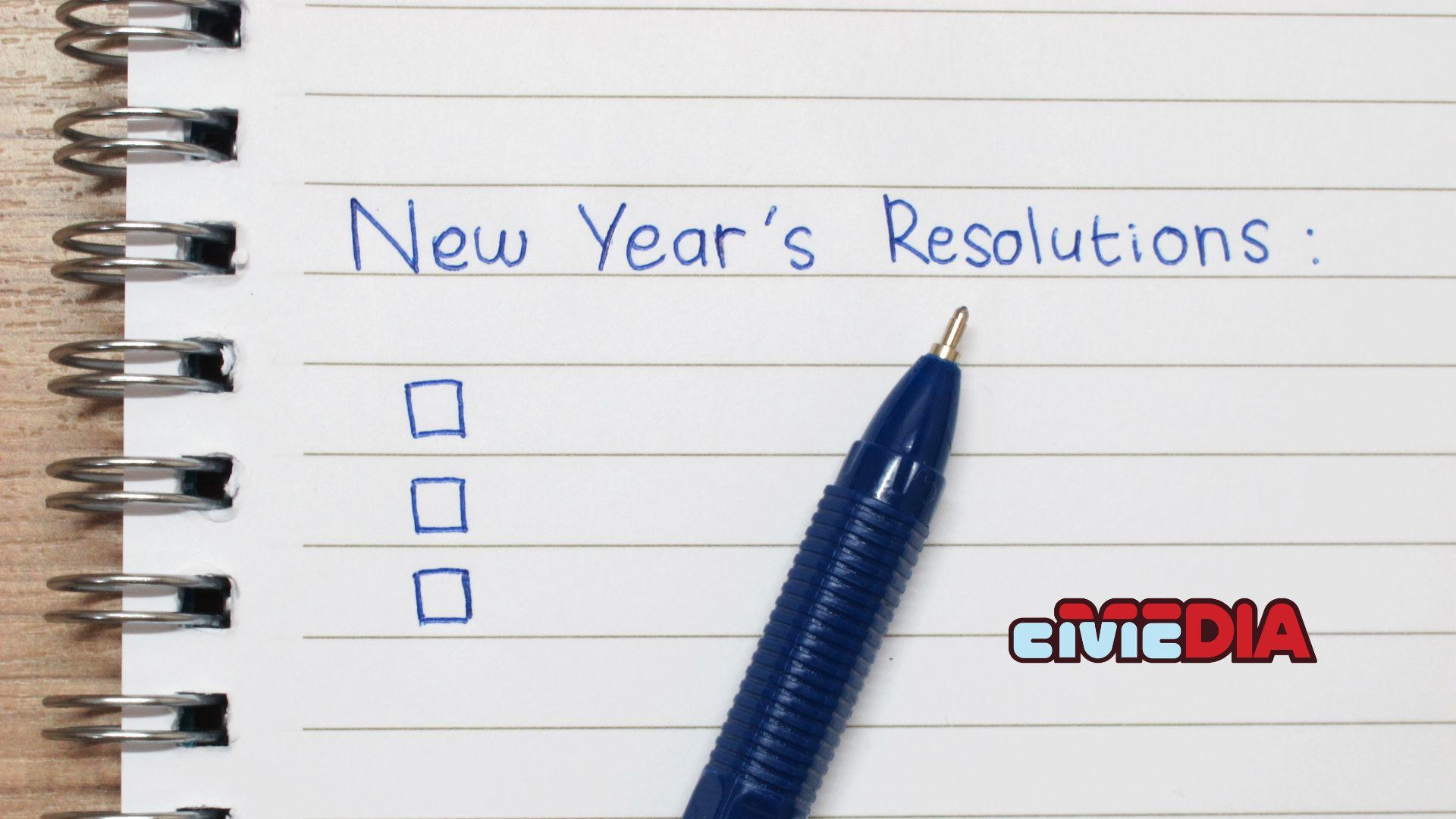
Are you making New Year’s resolutions? Think a different way

Jan 2, 2026, 12:52 AM CT


Share
New Year’s resolutions are a fascinating mix of hope, ambition, and a little bit of self‑mythology.
They are essentially a ritualized moment in time where people pause, look at the gap between who they are and who they want to be, and decide to take a swing at closing that gap.
There’s something powerful about that clean‑slate feeling, almost like the calendar itself gives you permission to reset your habits, rewrite your priorities, or chase something you’ve been avoiding.
What’s interesting is that resolutions aren’t really about perfection; they are more about intention. Even when people don’t stick to them perfectly (and most don’t), the act of setting them can clarify what actually matters to you.
You are not alone
About 30% of Americans make New Year’s resolutions, according to a Pew Research Center survey. Other surveys show almost half of American adults set at least one resolution each year. The bad news is only 9% of Americans actually keep their resolutions, meaning 91% of resolutions fall by the wayside.
As a matter of fact, several studies also show that 75% of people abandon their resolutions within the first month.
Resolutions usually collapse by mid‑January, so much so that the second Friday of January is nicknamed “Quitter’s Day”.
But what can I do?
You’re not alone in feeling like the whole “New Year’s resolution” thing is a bit overrated. The truth is, there are much more effective (and less pressure‑filled) ways to grow or change. Here are a few approaches that tend to work better because they’re grounded in real habits:
Choose a theme for the year
Instead of a rigid goal, pick a guiding idea like connection, health, curiosity, or stability. A theme gives you direction without the guilt trip. It shapes your choices all year long, not just in January.
Set tiny, flexible experiments
Think in terms of “30‑day experiments” or “one‑week trials.”
- Try a new habit for a week
- Adjust it
- Keep what works, drop what doesn’t This builds momentum without the all‑or‑nothing trap.
Build systems, not goals
Instead of “I will lose weight,” think: “I’ll walk for 10 minutes after lunch” or “I’ll cook at home twice a week”. Systems are repeatable actions. Goals are outcomes you can’t always control.
Pick one small habit and anchor it
Choose something tiny and attach it to something you already do: After your brushing teeth, try 2 minutes of stretching. After your morning coffee, write one sentence. Small habits compound in a way resolutions rarely do.
You don’t need New Year’s resolutions to grow, because real change doesn’t wait for a date on the calendar.
Resolutions often pile on pressure, set unrealistic expectations, and make you feel like you’ve failed if life doesn’t unfold perfectly.
Allow yourself to evolve gradually, quietly, and on your own timeline. You can choose small, meaningful shifts any day you wake up with the energy to try.
When you stop tying your progress to a new year, you free yourself to build habits that actually last, because they come from who you are becoming, not who you think you’re supposed to be.
Happy New Year!

Adam Hess has been involved in radio broadcasting since 1990, with many of those years spent on the air at WRCO FM in Richland Center. Currently, Adam hosts the Weekend Wake-up and Prime Mover Saturdays on WRCO FM, jumps in and helps out with news duties, handles Social Media duties for WRCO and WRCE, and is the Director of Technology at a Southwest Wisconsin School District. Reach him at adam.hess@civicmedia.us.
Want More Local News?

Civic Media
Civic Media Inc.
The Civic Media App
Put us in your pocket.
