
New UW-Madison Major will Teach Students to Bridge Partisan Divides
Young people are flocking to public policy classes at a time when polarization and gridlock can paralyze legislative action. To meet the demand, the La Follette School of Public Affairs will launch its first undergrad major in fall 2026, with a focus on civil dialogue and finding common ground. SEO headline: UW-Madison public policy major will teach students to bridge partisan divides SEO summary: The La Follette School of Public Affairs will launch its first undergrad major in fall 2026, with a focus on civil dialogue and finding common ground.
Dec 13, 2025, 8:26 AM CT


Share
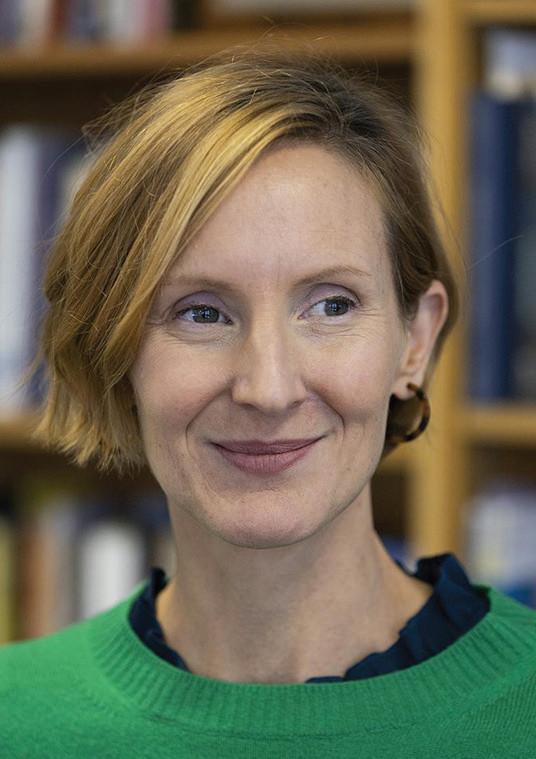
“If we can position students with (these) skills … and they can be trained and ready to go when our country arguably needs them more than ever, then we will have done our job as educators,” Susan Webb Yackee says. (Joe Timmerman / Wisconsin Watch)
This story was produced and originally published by Wisconsin Watch, a nonprofit, nonpartisan newsroom. It was made possible by donors like you.
At a time when American politics are increasingly polarized and partisan, the University of Wisconsin-Madison is launching a new undergraduate major focused on working across those divides to create evidence-based public policy.
The public policy major, debuting in fall 2026, is the first undergraduate major from the La Follette School of Public Affairs. The Wisconsin Legislature created the school in 1983 to educate future public servants for state and local government. In 2019, after decades of offering only graduate programs, the school added undergraduate certificates — UW-Madison’s version of a minor — in public policy and later in health policy.
Today, they’re among the most popular certificates on campus, said La Follette School Director Susan Webb Yackee. The animosity and gridlock that plague American politics hasn’t discouraged students. In fact, she thinks it’s only made them more interested.
“This could be a time when our young people are running away from our policy problems, but many of them are running toward them,” Yackee said, noting that she’s seen particular interest in policies about health, environment and climate change.
With the new major, those young people will have the option to make public policy their primary focus. School leaders say that it’s the first public policy major in Wisconsin and that it may be the only one in the country focused on teaching students how to engage in civil dialogue and find common ground.
Those are the skills society needs today, Yackee said.
“In a 50-50 state like Wisconsin, in a 50-50 country like the United States, we won’t be able to solve our big public policy problems by simply taking the point of view that one might agree with,” Yackee said. “We will have to work across the political aisle to make real change.”
Yackee spoke to Wisconsin Watch about how she hopes the new program will transform students, campus and the future of policymaking in the United States.
The following interview has been edited for length and clarity.
Do you hear students expressing frustration with politicians today?
I think there’s a lot of frustration with inaction, and I think that’s normal for traditionally aged college students. Is that any different today than it was in the 1970s or the 1950s? They’re impatient for change, and good for them. I am too, and I love their impatience.
Let me give you a concrete example of a class I taught … It was for students to do applied policy analysis with real-world clients. This class happened to have three real-world clients, and they were all sitting Wisconsin legislators…
The first day of class was me saying, “Some of you are going to get assigned to work with a Republican (client), and some of you are going to get assigned to work with a Democrat … and if that’s a problem for you in this class, then you ought not to take it, because we are going to provide the best nonpartisan analysis that we can possibly provide to these elected members so that they can make the best decisions they can make for our state.”
It was sort of like a pin drop when I said that. Nobody dropped the class. Those students did a fabulous job … A lot of those students were bio majors or chem majors — they weren’t political science majors. They did these reports on these topics, and some of them have now been passed into state law. So they were part of the ecosystem which created real change.
The students … (also) testified in one of the Senate committee rooms in the Wisconsin Legislature… They presented. They were asked questions. Afterwards, one of the students came up to grab me and said, “Dr. Yackee, this is the professional thrill of my lifetime” …
That class is sort of a nutshell of what we’re hoping to accomplish in this undergraduate major.
What do we know about how to promote civil dialogue and find common ground and about how to teach people to do that?
One of the things that we know about teaching classes on talking across the political divide is the importance of establishing ground rules in terms of how those conversations are going to take place.
One of our current faculty members, Associate Professor Amber Wichowsky, very much emphasizes curiosity. One of the ground rules for her classes is you need to be curious about how and why people feel differently than yourself …
It’s innate human behavior to put people in different camps of “us” and “them” … If we come into conversations with that framing, we will not be successful. If we come in with a framing of curiosity and an openness to new perspectives and ideas — it is not that we’re looking to change people’s values, but we are looking to humanize the other because that is one step toward being able to listen to other people’s points of view and work across the political divide.
Free speech on campus is a hot topic these days. How do you hope the major and the skills that you’re providing students might create the kind of environment that you’d like to see on campus?
Great question. I think of it like my bicep: I don’t work out as much as I should, but the more I work out that muscle, the stronger it gets. I think we don’t have enough opportunities for students to engage with people that are different than them and think differently than them.
Let me submit that a university is a place of ideas, so the most important kind of diversity is the diversity of ideas. It should be a fundamental job of ours to encourage those interactions … We’re going to do that in our classes, but we’re also going to do that by hosting politicians and practitioners and journalists that have different points of view. We’ve done that now for years, and we will continue to do that.
So if this major is successful, how do you picture the campus will be different?
We hope that it would provide an outlet for students who are interested in applied politics and policy and careers in that space to have a fuller and richer UW-Madison educational experience …
If we can position students with (these) skills … and they can be trained and ready to go when our country arguably needs them more than ever, then we will have done our job as educators, but we’ll also have done our job in promoting the Wisconsin Idea in a really important way.
Have a question about jobs or job training in Wisconsin? Or want to tell a reporter about your struggle to find the right job or the right workers? Email reporter Natalie Yahr, nyahr@wisconsinwatch.org, or call or text her at 608-616-0752.
Yahr reports on pathways to success statewide for Wisconsin Watch, working in partnership with Open Campus.

Want More Local News?

Civic Media
Civic Media Inc.
The Civic Media App
Put us in your pocket.
